
Last reviewed
Background
A southeast port where Minnan culture, overseas exchange and island landscapes meet.
Xiamen occupies islands and coastal districts around the Jiulong River estuary in southern Fujian. Its sheltered harbor connected Minnan communities with maritime trade and migration, while the city's modern form grew across Xiamen Island, the mainland districts and the narrow strait facing Kulangsu. Today the useful visitor contrast is between dense historic streets, university and temple precincts, long coastal public spaces and the quieter heritage fabric offshore.
Minnan language, food, architecture and customs give Xiamen a regional identity shared with surrounding southern Fujian, but the port also absorbed ideas carried by merchants, diplomats, educators and overseas Chinese. Kulangsu's nineteenth- and twentieth-century settlement and Jimei's education-focused legacy of Tan Kah Kee show different sides of that exchange without reducing Xiamen to beaches and cafés.
Recommended itineraries
Recommended itineraries
Give Kulangsu a full day, keep the southern coast and old center together, and reserve Jimei for a separate half or full day. Nanjing Tulou belongs to Zhangzhou and is not folded into the Xiamen city route.
Compact Xiamen
A short city break that prioritizes Xiamen Island and leaves Kulangsu for a future full-day visit.
- Day 1 · Visit South Putuo Temple, view Xiamen University's early architecture where access permits, follow a short Island Ring Road segment and finish with food around Zhongshan Road.
- Day 2 · Choose the botanical garden and Hulishan Fortress for landscape and maritime history, then walk the Railway Culture Park or Yundang Lake before dinner.
Xiamen essentials
A balanced first visit covering the south-island landmarks, maritime streets and Kulangsu's heritage landscape.
- Day 1 · Visit South Putuo Temple respectfully, view the early Xiamen University precinct where public access permits, then follow the Island Ring Road coast toward Zengcuo'an before an evening around Zhongshan Road.
- Day 2 · Take a prebooked official ferry to Kulangsu, walk the historic settlement, choose Shuzhuang Garden and Sunlight Rock, and leave time for architecture away from the busiest commercial lanes.
- Day 3 · Explore Jimei School Village and the Tan Kah Kee memorial landscape, then return for a relaxed waterfront walk and a focused Minnan food crawl.
Slow coast and culture
A lower-pressure route that separates the city's strongest cultural areas and allows weather flexibility.
- Day 1 · South Putuo Temple, the Xiamen University exterior or authorized campus visit, and a short coastal section around Baicheng and the Island Ring Road.
- Day 2 · Kulangsu's historic lanes, Shuzhuang Garden, music collections and Sunlight Rock, with ferry times confirmed in advance.
- Day 3 · Jimei School Village, the Tan Kah Kee Memorial Museum and Ao Garden, focusing on education, migration and public architecture.
- Day 4 · Choose the botanical garden or another managed city landscape, then spend the evening around Zhongshan Road and sample several small Minnan dishes.
Attractions & practical tips
What to see—and how to approach it.
Kulangsu (Gulangyu)
鼓浪屿
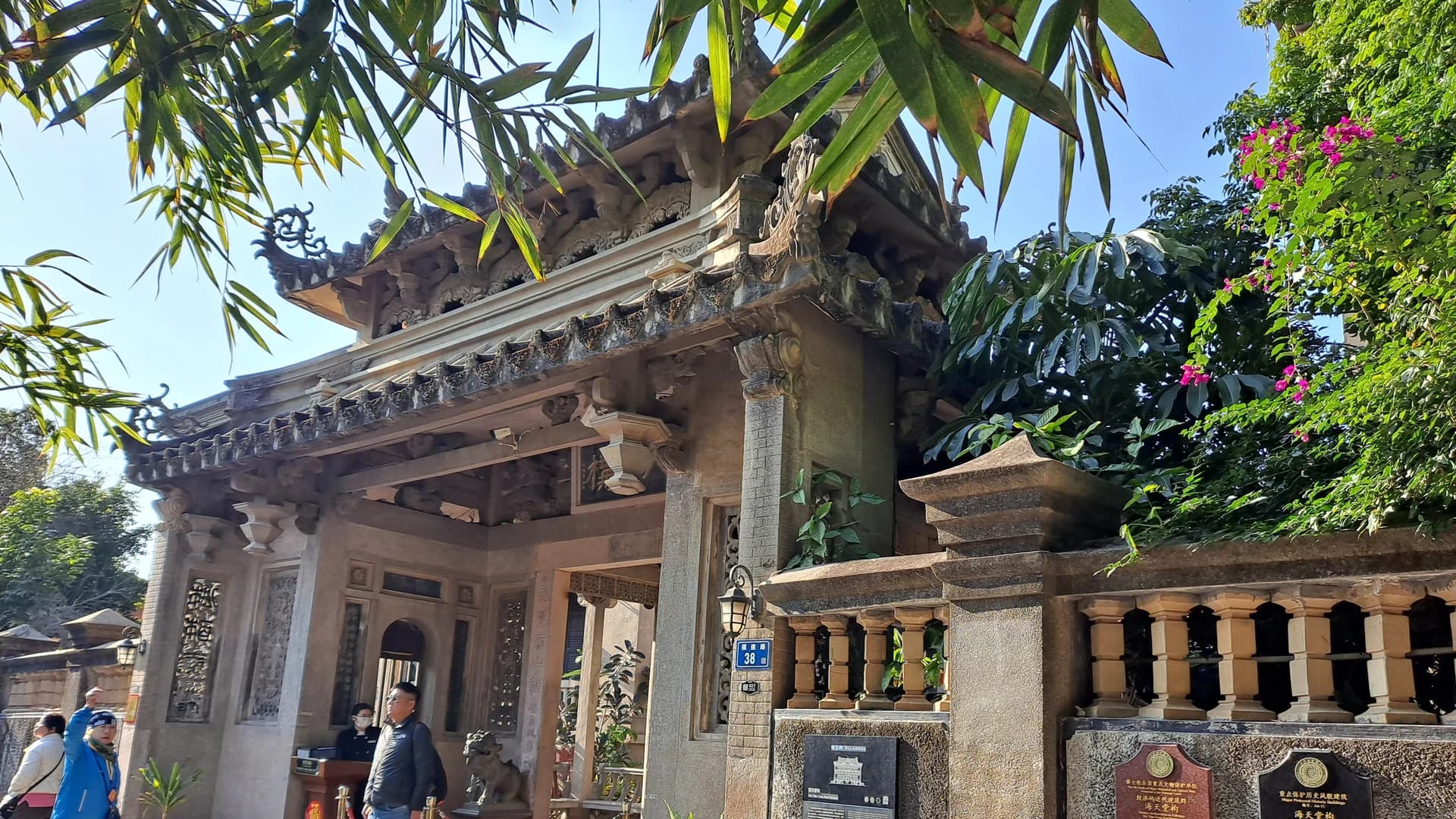
The car-free island across the Lujiang Strait is a World Heritage historic international settlement whose lanes, gardens and hundreds of buildings record exchanges among southern Fujian, overseas Chinese, Southeast Asian and European communities. Its value lies in the whole urban fabric, including the hybrid Amoy Deco style, not only in a checklist of ticketed sights.
Practical tips
- Reserve the correct visitor ferry through an official channel and confirm departure port, identity-document rules and return options; the PDF's 2013 ferry details are obsolete.
- Walk beyond the commercial core, keep voices low in residential lanes and never enter or photograph private interiors without permission.
South Putuo Temple
南普陀寺
A major Buddhist complex beneath Wulao Peak, with Minnan-style halls, courtyards, ponds and an active monastic and educational community beside Xiamen University.
Practical tips
- Dress modestly, keep worship areas quiet and follow current signs on incense and photography.
- Treat the vegetarian food as part of a living religious setting, not a staged attraction.
Xiamen University early architecture
厦门大学早期建筑
Founded with support from overseas Chinese educator Tan Kah Kee, the campus combines landscaped grounds with early buildings that fuse southern Fujian roof forms and modern institutional design.
Practical tips
- The university is a working campus, so verify current public reservation and entry rules rather than assuming access.
- Do not enter teaching or residential buildings, block students or treat the campus as an unrestricted photo set.
Island Ring Road
环岛路
A long coastal corridor linking beaches, headlands, public art and neighborhoods along southern and eastern Xiamen Island.
Practical tips
- Choose one walk or ride segment instead of trying to cover the entire road, and use designated paths.
- Check heat, wind, rain and storm warnings; keep off exposed shorelines when barriers or weather advisories are in force.
Zengcuo'an
曾厝垵
A former coastal village whose lanes now mix homes, shrines, small guesthouses, food stalls and visitor-oriented businesses, preserving fragments of Minnan settlement inside a heavily touristed district.
Practical tips
- Visit early for calmer lanes and look for community and religious buildings beyond the snack streets.
- Respect residents, ask before photographing people or private homes and do not mistake commercial styling for the whole village's history.
Zhongshan Road
中山路
Arcaded commercial streets near the old waterfront layer qilou architecture, long-running food traditions and contemporary retail into an accessible evening walk.
Practical tips
- Use side streets and upper façades to read the architecture instead of remaining only on the busiest shopping strip.
- Sample small portions at busy, hygienic shops and keep valuables secure in dense evening crowds.
Jimei School Village
集美学村
An education district developed through Tan Kah Kee's philanthropy, with schools and civic buildings that combine modern plans, southern Fujian roofs and a carefully organized waterfront setting.
Practical tips
- View the protected streetscape as a whole and remember that many buildings remain active educational spaces.
- Check current public boundaries and avoid entering campuses or classrooms without authorization.
Tan Kah Kee Memorial Museum and Ao Garden
陈嘉庚纪念馆与鳌园
The museum and nearby memorial landscape explain Tan Kah Kee's life as a businessman, overseas Chinese community leader and education philanthropist, connecting Jimei to wider migration networks.
Practical tips
- Visit the museum before the memorial garden so the architecture and inscriptions have biographical context.
- Confirm current museum reservations and closure days, and keep a respectful tone around the tomb and memorial spaces.
Shuzhuang Garden
菽庄花园
A former private seaside garden on Kulangsu that frames the open strait through compact courtyards, rockwork and paths, and now incorporates important music collections.
Practical tips
- Move slowly through the garden's reveal-and-conceal sequence rather than treating it only as the route to a museum.
- Check current combined-ticket and gallery arrangements and follow coastal closures during rough weather.
Sunlight Rock
日光岩
Kulangsu's highest granite outcrop provides a compact summit view over red-roofed lanes, the Lujiang Strait and Xiamen's urban shoreline.
Practical tips
- Go outside the busiest middle hours when possible because the final stairs and viewpoint are confined.
- Wear grippy shoes, follow one-way crowd controls and skip the exposed summit during lightning, high wind or heavy rain.
Xiamen Botanical Garden
厦门园林植物园
A large botanical landscape around Wanshi Reservoir where tropical and subtropical collections meet granite hills, historic paths and broad city views.
Practical tips
- Choose a few collections and use current internal transport information because the garden is too large to cover casually on foot.
- Carry water and sun protection, stay on marked paths and avoid exposed hills during storms or extreme heat.
Hulishan Fortress
胡里山炮台
A late-Qing coastal defense complex on a headland near Baicheng, combining fortified earthworks, barracks and artillery with views across the approaches to Xiamen.
Practical tips
- Use the site to understand nineteenth-century coastal defense rather than treating weapons or reenactments as spectacle.
- Confirm current exhibitions and performance schedules, and keep clear of barriers and restricted structures.
Railway Culture Park
铁路文化公园
A linear public park reusing a former rail corridor through central Xiamen, with cuttings, tunnels and neighborhood connections that make it useful for a low-key urban walk.
Practical tips
- Walk one connected segment rather than trying to complete the full corridor.
- Share narrow tunnels and paths carefully with local walkers and avoid closed sections during maintenance or heavy rain.
Yundang Lake
筼筜湖
An urban lagoon and park system west of the city center, surrounded by civic buildings, planted paths and evening public life.
Practical tips
- Use it for a short dusk walk rather than a major sightseeing block.
- Stay on public paths, keep away from water during storms and respect bird habitat and local exercise groups.
Food & dining
Eat with a little local context.
Xiamen food sits within the wider Minnan tradition, emphasizing seafood, rice and wheat snacks, peanut, fermented sauces and broths with more depth than raw chilli heat. Vendor names and prices from the 2013 source are omitted; compare busy specialists and clarify seafood or peanut allergies.
Shacha noodles
沙茶面
Noodles arrive in a rich, aromatic broth based on Xiamen-style shacha sauce, with diners choosing seafood, tofu, offal or other additions.
Try it this way: Ask about peanut, sesame, shellfish and offal before selecting toppings because recipes vary by shop.
Shrimp noodles
虾面
A deeply colored shrimp-shell broth carries noodles and savory toppings, concentrating seafood sweetness without necessarily being very spicy.
Try it this way: Choose a busy specialist and disclose shellfish allergies; the red broth color does not reliably indicate chilli level.
Oyster omelette
海蛎煎
Small oysters, egg, starch and aromatics cook into a crisp-edged, soft-centered Minnan snack often finished with a sweet-savory sauce.
Try it this way: Eat it freshly cooked from a clean, high-turnover griddle and state shellfish allergies clearly.
Tusun dong
土笋冻
A chilled savory aspic made from a local marine spoon worm, commonly served with garlic, vinegar, mustard or chilli sauce.
Try it this way: Confirm the ingredient before ordering and try a small portion from a reputable cold-chain vendor.
Peanut soup
花生汤
Peeled peanuts are simmered until very soft in a sweet, milky-looking soup served as breakfast, dessert or a snack.
Try it this way: It is unsuitable for peanut allergies and can be quite sweet, so share a small bowl alongside a savory snack.
Fried five-spice roll
炸五香
Seasoned minced meat, water chestnut and aromatics are wrapped in bean-curd skin and fried until crisp.
Try it this way: Ask about pork and seasoning, and eat the roll hot from a clean fryer rather than after it has sat out.
Mianxian hu
面线糊
Very fine wheat noodles soften into a thick savory broth, then receive additions such as egg, seafood, meat or fried dough.
Try it this way: Ask what broth and toppings are used if avoiding seafood, pork or offal.
Ginger duck
姜母鸭
Duck is slowly braised with abundant old ginger, sesame oil and aromatics into a warming, deeply savory Minnan dish.
Try it this way: Order it for sharing, expect bones and ask about alcohol or herbal ingredients used in the braise.
Taro bun
芋包
A soft taro-based wrapper encloses a savory filling that may include pork, mushrooms, bamboo shoots or dried seafood before steaming.
Try it this way: Confirm the filling and seafood ingredients because the name alone does not reveal them.
Grass jelly
烧仙草
Herbal grass jelly is served warm or chilled with beans, taro balls, peanuts and other sweet toppings.
Try it this way: Choose toppings individually and disclose peanut or dairy allergies; a small bowl is enough after a snack crawl.
Minnan meat rice dumpling
闽南烧肉粽
Glutinous rice is wrapped and steamed with pork and may include mushroom, chestnut, egg yolk or dried seafood, then served with a house sauce.
Try it this way: Ask about the filling and portion size, especially for shellfish, egg or peanut-sensitive diners.
FAQ
Questions worth answering before you go.
How many days should I spend in Xiamen?
Three days covers the south-island core, one full Kulangsu day and Jimei. Four days gives weather flexibility and space for a botanical or coastal outing without rushing the heritage areas.
When is Xiamen most comfortable?
Spring and autumn often bring the easiest walking conditions. Summers are hot, humid and exposed to heavy rain or tropical-storm disruption; use current forecasts and official warnings rather than the PDF's old seasonal generalizations.
How should international visitors plan the Kulangsu ferry?
Use the current official booking channel, enter the traveler identity details exactly as required, and confirm the visitor departure port and sailing before travel. Arrive early with the same valid identity document used for the reservation; ports and rules have changed since 2013.
Can I walk into Xiamen University?
Do not assume open access. It is a working university and may use advance reservations, identity checks, limited gates or temporary closures. Verify current official rules and use nearby public viewpoints when entry is unavailable.
Are Nanjing Tulou part of Xiamen?
No. Xiamen is a common transport base, but Tianluokeng, Yunshuiyao and the other Nanjing County tulou are in Zhangzhou. Give that World Heritage landscape its own Destination plan instead of counting transfer time as Xiamen sightseeing.
How should I plan around public-holiday crowds?
Reserve ferries and any timed attractions early, keep flexible alternatives on Xiamen Island and avoid building a day around a single unconfirmed campus or museum entry. Kulangsu has finite visitor capacity, so do not rely on same-day availability during major holidays.
Can I swim anywhere along Xiamen's coast?
No. Use only currently designated bathing areas when lifeguard, water-quality and weather conditions permit. Obey flags and barriers, keep away from rocks and exposed seawalls during high wind or storms, and never infer safety from other people being in the water.