Last reviewed
Background
A mountain city whose quartz-sandstone pillars, ravines and caves form one of China's most distinctive protected landscapes.
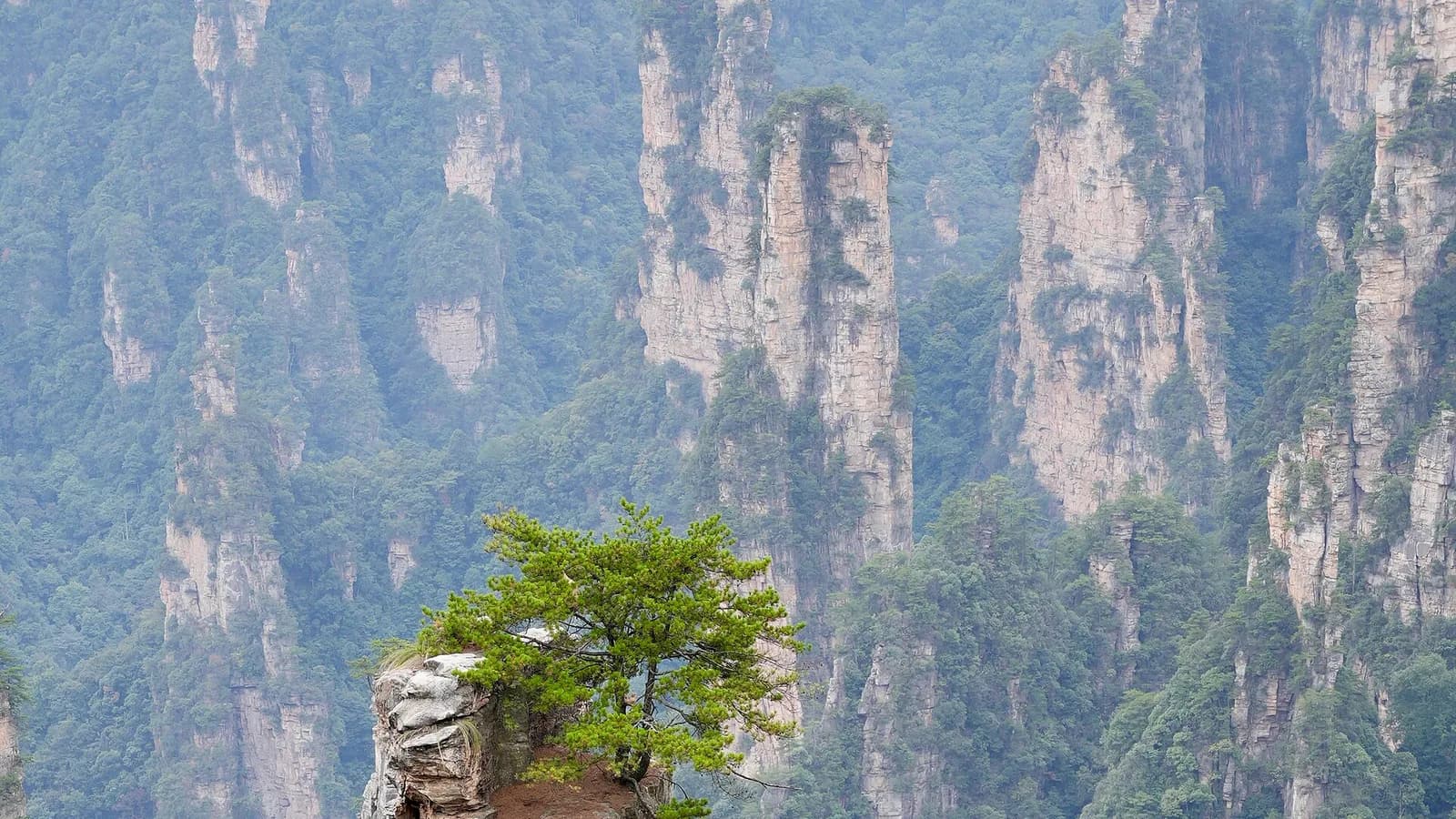
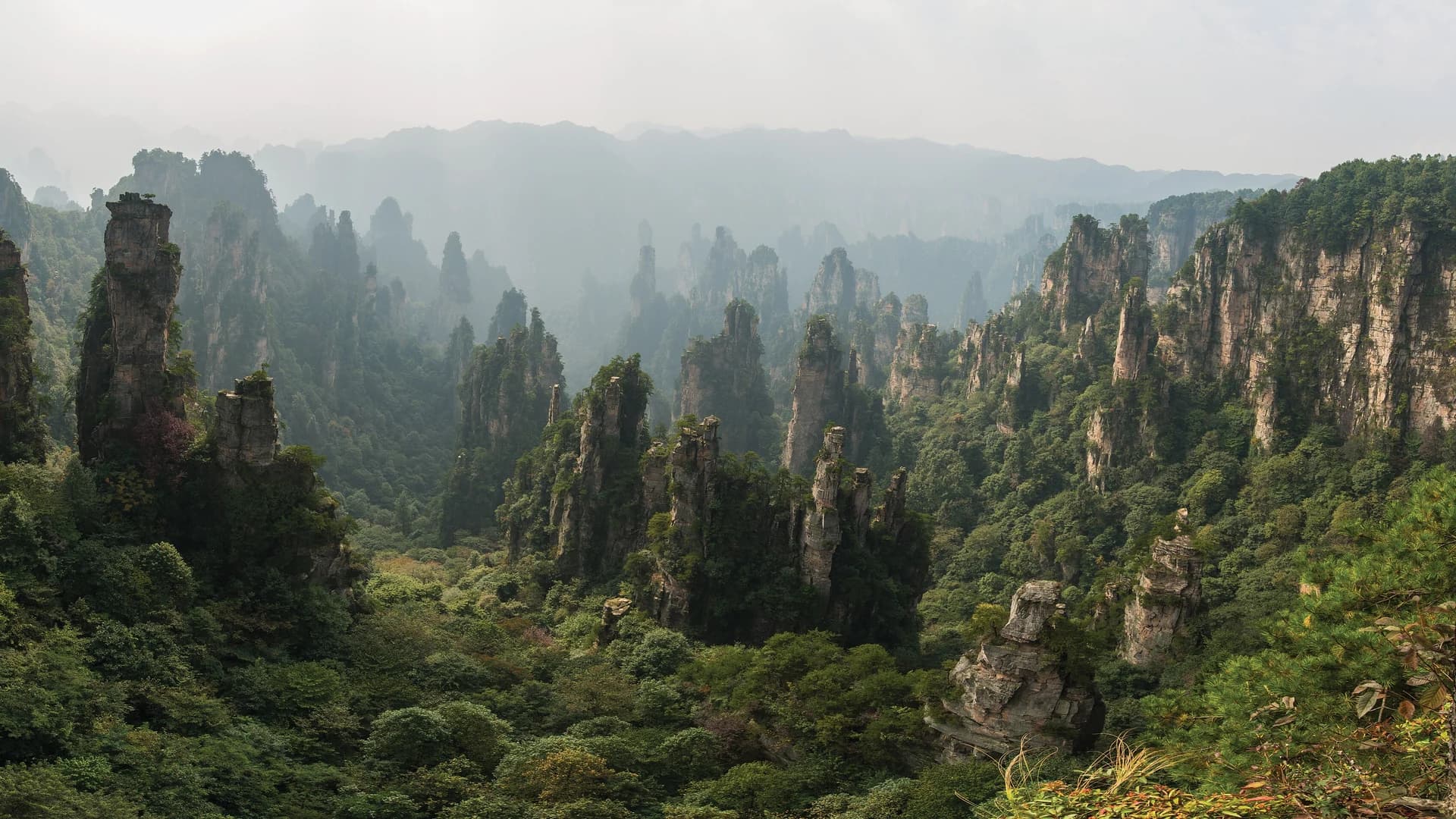
Northwestern Hunan's Wulingyuan Scenic and Historic Interest Area protects more than 3,000 narrow quartz-sandstone pillars and peaks alongside ravines, waterfalls, caves and forest. Water, gravity and weathering worked through vertical joints in the rock over a very long period, leaving the steep, isolated forms that define the landscape. UNESCO inscribed Wulingyuan as a World Heritage property in 1992 for this exceptional scenery and biodiversity.
Zhangjiajie municipality was formerly known as Dayong and took its present name in 1994 as tourism grew around the national forest park. The municipality includes the urban Yongding and Wulingyuan districts as well as Cili and Sangzhi counties. Tujia, Bai, Miao and Han communities all contribute to contemporary life here; food, weaving, music and performance are living practices, not a single timeless ethnic display.
Recommended itineraries
Recommended itineraries
Wulingyuan is a large mountain system rather than one viewpoint. Group each day by elevation and park zone, leave buffer time for queues and weather, and treat Tianmen Mountain as a separate excursion from the national forest park.
Wulingyuan's core landscapes
A first visit paced around the upper viewpoints, a forested valley walk and one quieter mountain zone.
- Day 1 · Enter through the gate that fits your accommodation and current reservation. Reach Yuanjiajie by the operating elevator, ropeway or a confirmed walking route, explore the managed viewpoints, then continue toward Tianzi Mountain if weather, queues and the last descent allow.
- Day 2 · Walk the open section of Golden Whip Stream at valley level. Add Huangshizhai only if you have enough daylight and choose either the marked climb or the current ropeway rather than forcing both into a rushed loop.
- Day 3 · Choose Yangjiajie's open managed trails or Ten-mile Gallery and the Suoxiyu side. Keep plans flexible because maintenance, ice, heavy rain and crowd controls can change shuttle and trail access.
Mountains, cave and lake at a slower pace
Three Wulingyuan days plus separate karst and Tianmen days, avoiding repeated transfers between distant gates.
- Day 1 · Yuanjiajie and Tianzi Mountain, using managed vertical transport according to current operations and your mobility.
- Day 2 · Golden Whip Stream, with Huangshizhai only if conditions and energy suit the extra ascent.
- Day 3 · Yangjiajie's open routes and Ten-mile Gallery, or a weather-buffer day within Wulingyuan.
- Day 4 · Visit Huanglong Cave on its controlled route, then add Baofeng Lake if reservations, transfer time and weather align.
- Day 5 · Give Tianmen Mountain its own day from the Yongding urban area. Follow the route assigned with the current ticket and expect cableway, road or upper-walkway changes in poor weather.
Attractions & practical tips
What to see—and how to approach it.
Wulingyuan Scenic and Historic Interest Area
武陵源风景名胜区
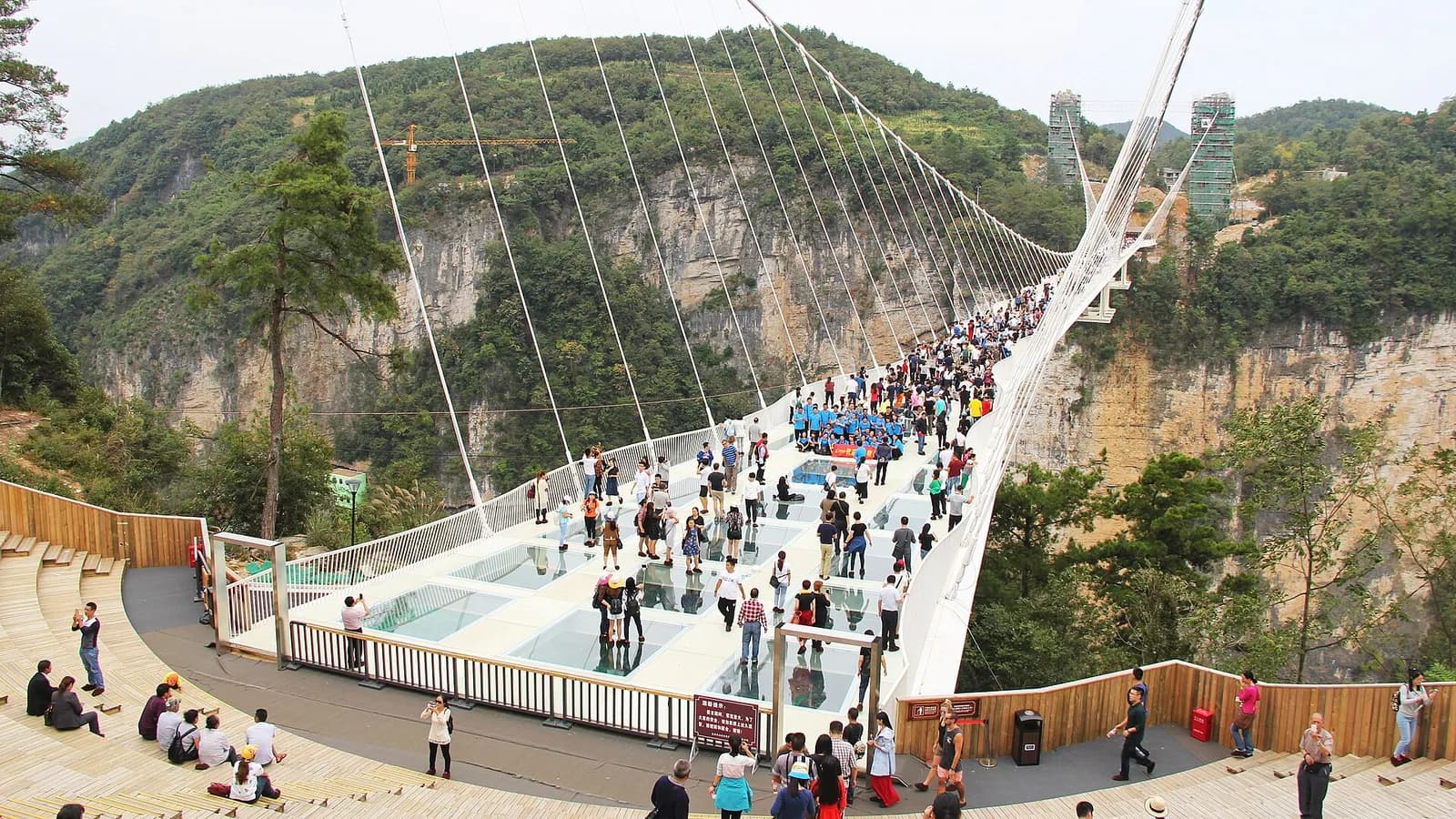
The World Heritage property brings together Zhangjiajie National Forest Park, Suoxiyu, Tianzi Mountain and Yangjiajie in one vast protected landscape of sandstone pillars, ravines, streams, caves and forest.
Practical tips
- Check the current ticket validity, reservation rules, open gates and last shuttle before travel; the source guide's prices and operating hours are obsolete.
- Do not plan by straight-line distance. Elevation changes, queues and the internal shuttle network determine what fits in one day.
Golden Whip Stream
金鞭溪
A forested valley path follows clear water beneath high sandstone walls and pillars, giving a ground-level counterpoint to Wulingyuan's famous upper viewpoints.
Practical tips
- Wear shoes with wet-grip soles and turn back or shorten the walk if rain, flood control or park notices affect the gorge.
- Keep food packed away and never feed or approach macaques; loose bags and visible snacks attract conflict.
Yuanjiajie
袁家界
This upper plateau holds some of Wulingyuan's most recognizable pillar panoramas, including the formation promoted as Avatar Hallelujah Mountain and viewpoints across deep ravines.
Practical tips
- The Bailong Elevator is one access option, not a separate destination. Check its current operation and compare queue time with ropeway, shuttle and walking alternatives.
- Stay behind barriers: fog can hide cliff edges, and unofficial shortcuts damage vegetation and bypass safety controls.
Yangjiajie
杨家界
The western Wulingyuan zone combines dense forest, narrow pillar walls and elevated viewpoints and is often less concentrated than Yuanjiajie's headline circuit.
Practical tips
- Use only currently open marked paths. Do not follow the source guide's advice toward undeveloped or closed terrain.
- Some routes involve steep stairs and exposed sections; ask staff about accessibility, one-way controls and the last shuttle before committing.
Tianzi Mountain
天子山
High viewpoints in the northern part of Wulingyuan look across tightly packed sandstone peaks whose appearance changes dramatically with cloud, rain and low-angle light.
Practical tips
- Visibility can disappear quickly; keep a second route in reserve rather than waiting all day for one viewpoint to clear.
- Confirm the last ropeway and shuttle connections. A late arrival can leave a much longer stair descent than expected.
Huangshizhai
黄石寨
A high natural platform above the national forest park entrance provides broad views over surrounding pillar groups and wooded valleys.
Practical tips
- Choose the ropeway or the long stair climb according to current access, weather and your knees; combining both with a full Golden Whip Stream walk is demanding.
- Avoid exposed viewpoints during lightning, strong wind or ice and obey any temporary closure.
Ten-mile Gallery
十里画廊
A narrow Suoxiyu valley presents a sequence of forested rock formations traditionally named for human, animal and story-like silhouettes.
Practical tips
- Walking gives more time to observe the formations; use the sightseeing train only when mobility, weather or time makes it useful.
- Treat the names as interpretive prompts rather than geological facts and look for the shapes that make sense to you.
Tianmen Mountain
天门山
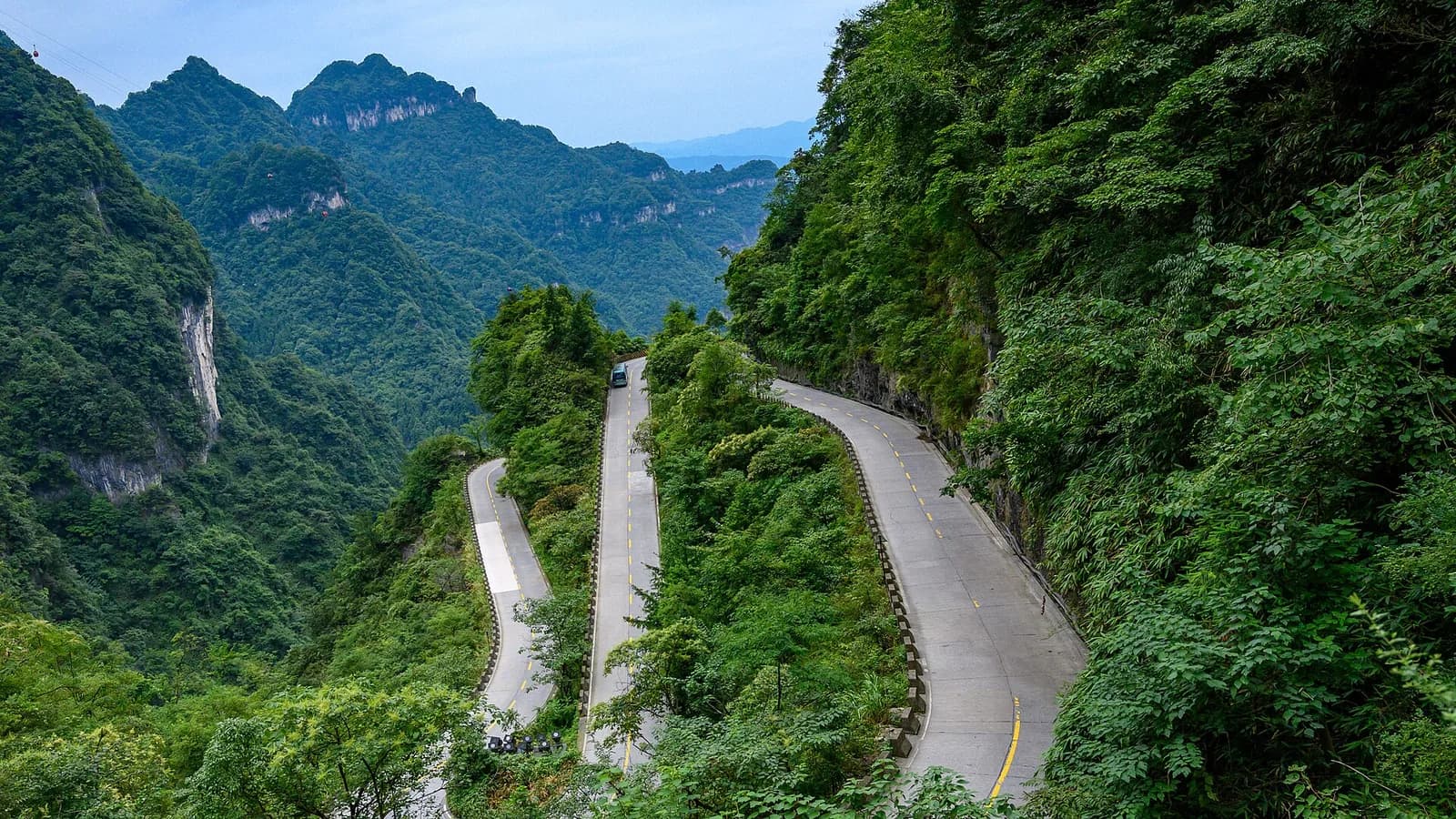
Rising beside central Zhangjiajie rather than inside Wulingyuan, Tianmen Mountain is known for its large natural arch, long cableway, cliffside paths and sharply engineered mountain road.
Practical tips
- Book the correct timed route and departure point through the current official channel; ticket types may assign cableway and road directions.
- Upper paths, escalators, stairs and the natural arch can close in wind, ice, lightning or maintenance. Never climb barriers for a photograph.
Huanglong Cave
黄龙洞
This extensive karst cave near Wulingyuan contains large chambers, underground water and dense stalactite and stalagmite formations along a managed visitor route.
Practical tips
- Expect stairs, dim light, damp surfaces and a cooler interior; wear stable shoes and carry a light layer.
- Follow the assigned route and photography rules, and never touch cave formations because skin oils and physical contact cause lasting damage.
Baofeng Lake
宝峰湖
A high, enclosed lake in the Wulingyuan area offers a calmer water-level view of forested cliffs and narrow inlets, usually through a managed boat visit.
Practical tips
- Confirm the current boat operation and weather before combining it with Huanglong Cave; access involves walking and transfers beyond the boat itself.
- Keep noise low, do not throw anything into the water and treat staged songs as a presentation rather than a complete account of local culture.
Food & dining
Eat with a little local context.
Zhangjiajie cooking reflects northwestern Hunan's preference for chili, sour pickles, cured ingredients and filling shared dishes. Tourist-zone menus vary widely, so ask about price, portion, meat and heat before ordering and choose licensed, busy kitchens that cook animal products thoroughly.
Tujia sanxiaguo
土家三下锅
A dry-pot-style local specialty combines several selected ingredients—often pork, offal, cured meat, tofu or vegetables—with chili and aromatics in one rich shared dish.
Try it this way: Ask exactly which three ingredients are included, request a lower chili level if needed and pair it with rice and a vegetable dish.
Tuan'nian hecai
团年合菜
Associated with family reunion meals, this one-pot dish cooks radish, tofu, cabbage, scallion, pork and chili together as a symbol of abundance and togetherness.
Try it this way: It is usually a shared dish; ask whether the kitchen offers it outside festival periods and whether pork stock is used.
Sour fish
酸鱼
Fish preserved with salt, rice or grain and seasonings develops the sour, savory profile found across parts of western Hunan.
Try it this way: Choose a reputable restaurant, ask for it fully cooked and expect a strong fermented flavor and small bones.
Tujia cured pork
土家腊肉
Smoked or air-cured pork is sliced and stir-fried with chili, garlic shoots, beans or other vegetables, bringing a concentrated salty and smoky flavor.
Try it this way: Order it as one component of a shared meal, and ask for less oil or salt if required; cured meat is not a good fit for a low-sodium diet.
Hezha
合渣
Ground soybean and chopped greens are simmered into a soft, rustic stew sometimes called lazy bean dregs, historically valued as an economical everyday food.
Try it this way: The base is soy, and kitchens may add pork fat or stock; confirm ingredients if you are vegetarian or allergic to soy.
Shefan
社饭
A seasonal mixed rice associated with the traditional she day combines glutinous and regular rice with spring herbs, scallion and cured pork.
Try it this way: Availability is seasonal and recipes vary by household or restaurant; ask about the herbs and pork rather than expecting one standard version.
FAQ
Questions worth answering before you go.
How many days should I spend in Zhangjiajie?
Three days give Wulingyuan a workable first visit. Four or five days let you add Tianmen Mountain, Huanglong Cave and Baofeng Lake without collapsing separate mountain zones into exhausting transfers. Keep one route flexible when cloud, rain or queues are likely.
When is the best time to visit?
Spring and autumn usually offer comfortable hiking conditions, but rain and fog are possible in every season and can be part of the landscape. Summer is hot, wet and busy; winter can bring ice, snow and service suspensions. Check short-range forecasts and official scenic-area notices instead of relying on the source guide's claim that winter access never closes.
How do tickets and entry gates work?
Wulingyuan, Tianmen Mountain, Huanglong Cave and Baofeng Lake are separate products, and Wulingyuan itself has multiple gates. Prices, validity, reservation windows, included shuttles and operating routes change. Use current official channels, match the identity document on the booking and confirm the exact gate before leaving your hotel.
Do I need to use the ropeways or Bailong Elevator?
Not always, but Wulingyuan involves major vertical changes and long stair routes. Managed ropeways, the elevator, sightseeing vehicles and trains can conserve energy, yet each may require a separate ticket or queue. Travelers with limited mobility should ask each scenic area about step-free segments and current equipment access before booking.
Do I need a guide, and how should I handle crowds safely?
Independent travel is possible with a current map and a deliberately limited route. A licensed guide can help with complex transfers and interpretation, but verify credentials, scope and price before starting. At busy viewpoints, keep to barriers and marked paths, ignore unlicensed solicitations, carry water and rain protection, and follow staff instructions when weather or crowd controls change.