Last reviewed
Background
A river-built metropolis where Wuchang, Hankou and Hanyang meet at the Yangtze–Han confluence.
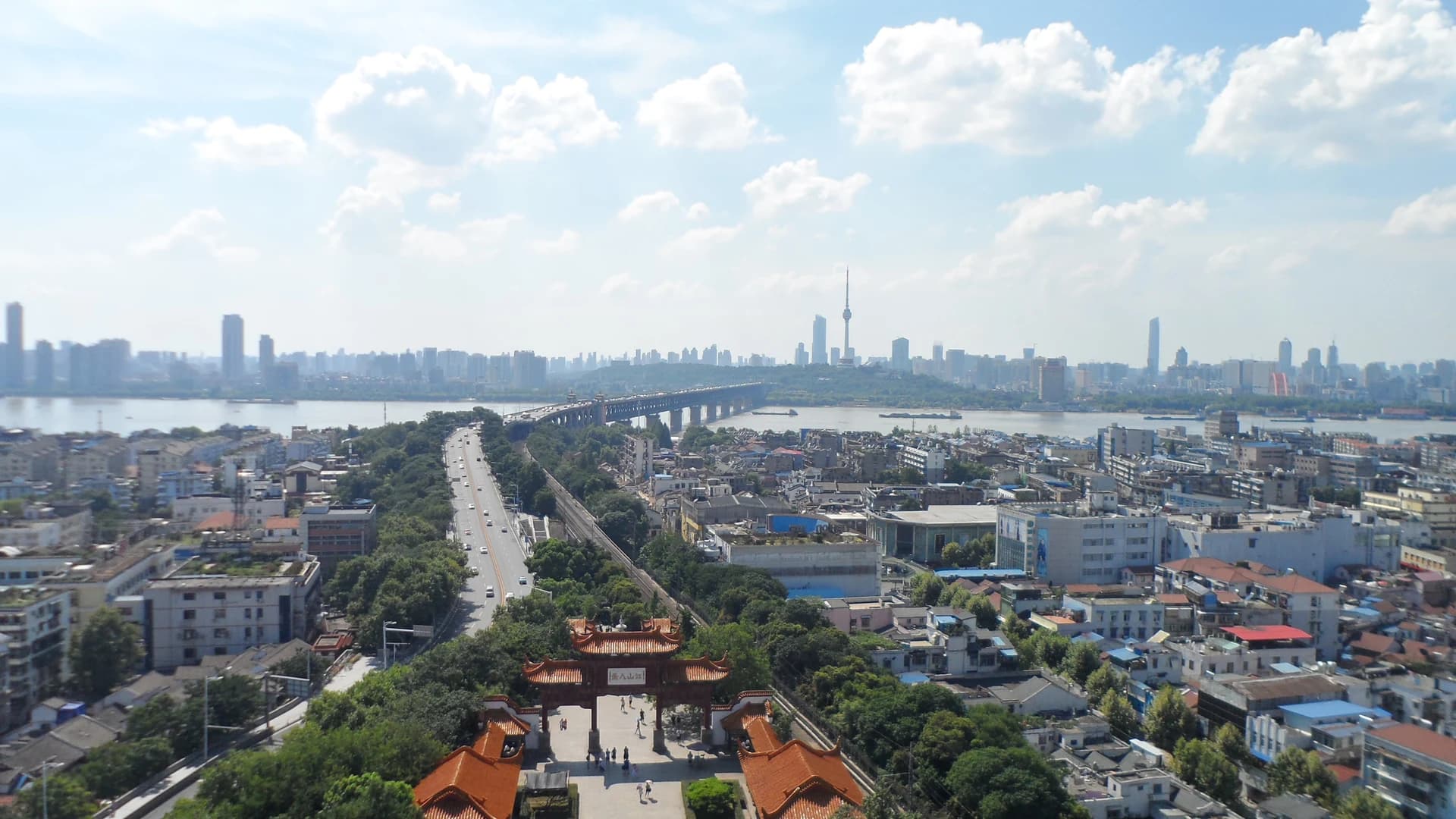
The Yangtze and Han rivers divide central Wuhan into the three historic towns of Wuchang, Hankou and Hanyang. That geography still shapes a visit: Wuchang concentrates major museums, universities and the 1911 story; Hankou holds commercial streets, concession-era architecture and riverfront life; Hanyang adds industrial, musical and temple heritage. Bridges, metro lines and ferries connect them, but crossing the water is part of understanding the city rather than dead travel time.
Wuhan’s crossroads history is much older than its modern name. Panlongcheng preserves a major early Shang-period center, Hankou grew into a powerful trading town after the Han River shifted course, treaty-port opening transformed the riverfront, and the Wuchang Uprising of 10 October 1911 made the city central to the revolution that ended imperial rule. Later industry, rail and university development added further layers without erasing the older river-and-market city.
Recommended itineraries
Recommended itineraries
Plan by riverbank rather than copying the old guide’s bus-heavy checklist. Keep Wuchang’s tower and revolution sites together, reserve a separate lake-and-museum block, and use one deliberate crossing to reach Hankou or Hanyang.
Wuhan essentials across the Yangtze
A compact first visit pairing Wuchang’s landmarks with Hankou’s historic streets and Hubei’s strongest museum collection.
- Day 1 · Start around the Wuchang Uprising sites, continue to Yellow Crane Tower, view or cross the active Wuhan Yangtze River Bridge only by an open pedestrian route, then take a current public ferry or metro to Hankou. Walk a selective line through Jianghan Road, Lihuangpi Road and the riverfront rather than trying to cover every historic building.
- Day 2 · Honor your timed entry at Hubei Provincial Museum, then choose one East Lake zone or greenway segment. Add Wuhan University only if campus access is open and you still have daylight; do not compress the whole lake into a short loop.
Three towns, three days
A slower route that gives Wuchang, the East Lake cultural zone and Hanyang–Hankou distinct identities.
- Day 1 · Explore Wuchang through the 1911 memorial complex, Yellow Crane Tower and a safe bridge or river view, then finish with a neighborhood breakfast or dinner rather than making Hubu Alley the only food stop.
- Day 2 · Reserve Hubei Provincial Museum first, continue along one manageable East Lake greenway or garden zone, and visit Wuhan University only under the current campus rules.
- Day 3 · Begin in Hanyang at Qingchuan Pavilion and Guiyuan Temple, then cross to Hankou for the historic district and riverfront. Substitute Gude Temple for Guiyuan if its architecture and quieter scale matter more than covering both active religious sites.
Attractions & practical tips
What to see—and how to approach it.
Yellow Crane Tower
黄鹤楼
Wuhan’s best-known landmark crowns Snake Hill above the Yangtze. The current tower opened in 1985, while the site’s much longer cultural memory survives through successive rebuildings, poetry and views across Wuchang, Hanyang and the river.
Practical tips
- Visit the cultural exhibition before climbing if you want to distinguish the historical sequence from the modern reconstruction.
- Check the current ticket and crowd notice, allow time for stairs and lifts, and do not assume a performance listed in the old PDF still runs.
Hubei Provincial Museum
湖北省博物馆
A major archaeological and art museum whose core displays interpret the Marquis Yi of Zeng tomb, Chu culture, the Sword of Goujian and other material histories from across Hubei.
Practical tips
- Make the required real-name reservation through an official channel and bring the same identity document; special exhibitions and the bell performance may have separate arrangements.
- Allow at least three hours and choose two or three core galleries instead of treating the collection as a quick stop before East Lake.
East Lake
东湖
A vast urban lake landscape links waterside greenways, Tingtao’s cultural sites, Moshan’s gardens and wooded recreation areas east of central Wuchang.
Practical tips
- Choose one zone and a realistic greenway segment; museum, garden and cycling plans can cover long distances even when they appear adjacent on a map.
- Use public transport during flower seasons and holidays, follow any temporary one-way or vehicle controls and never enter closed water or shoreline areas.
Wuhan University
武汉大学
The wooded Luojia Hill campus is known for its early twentieth-century university buildings, lake-edge setting and seasonal blossoms, while remaining first and foremost an active place of study and research.
Practical tips
- General public entry no longer requires advance booking as of May 2026, but carry valid identification and recheck official rules because blossom season or major events can introduce controls.
- Stay in public outdoor areas, keep teaching buildings and residences private, avoid blocking classes or roads and never fly a drone without authorization.
Wuhan Yangtze River Bridge
武汉长江大桥
Opened in 1957, this double-deck road-and-rail bridge joined Hanyang and Wuchang and became a defining piece of modern Wuhan’s transport and industrial history.
Practical tips
- It remains critical working infrastructure: use only an open designated pedestrian path, keep away from traffic and railway areas and never step into the road for a photograph.
- Confirm the current lift or observation access instead of relying on the PDF, and choose a riverside viewpoint if heat, wind, rain or crowding makes a full crossing uncomfortable.
Hankou historic district
汉口历史风貌区
Jianghan Road, Lihuangpi Road, former banks, warehouses, lane housing and the riverside form a broad walk through Hankou’s treaty-port commerce, colonial intrusion, local enterprise and contemporary reuse.
Practical tips
- Build a short thematic walk rather than collecting every building; plaques and museums help separate original fabric, restoration and new commercial interiors.
- This is a living district: keep residential lanes quiet, ask before photographing people, respect private buildings and avoid romanticizing the unequal treaty-port system.
Wuchang Uprising memorial complex
辛亥革命武昌起义纪念馆
The red former Hubei military government building and the adjoining museum network interpret the Wuchang Uprising of 1911, the revolutionary government and the wider transition from empire to republic.
Practical tips
- Check the current reservation and closure calendar for the memorial institution, which now manages several displays and historic spaces.
- Give the exhibitions time: the political history is more complex than a single heroic date, and original rooms should be distinguished from reconstructed displays.
Qingchuan Pavilion
晴川阁
A compact Hanyang riverside ensemble brings together Qingchuan Pavilion, Yuji Palace, Tiemen Pass and exhibitions about flood control and the cultural memory of Yu.
Practical tips
- Use the exhibits to distinguish surviving protected structures from later reconstruction and traditional flood-control legend from historical evidence.
- The riverside setting is exposed to heat, rain and changing water conditions; obey closures and keep outside fenced or wet-edge areas.
Guiyuan Temple
归元禅寺
A major active Buddhist monastery in Hanyang is especially known for its hall of five hundred arhat sculptures, scripture collection and strong place in Wuhan’s living religious culture.
Practical tips
- Check the temple’s own notice around Lunar New Year and other busy observances, when ticketing, entry directions and road access can change.
- Keep voices low, follow the designated incense area, do not bring oversized incense or flames and treat arhat divination as devotional custom rather than prediction.
Gude Temple
古德寺
A late nineteenth- and early twentieth-century Buddhist complex in Hankou is notable for the unusual cross-regional architectural vocabulary of its main hall and for its survival as a protected active temple.
Practical tips
- Approach the architecture through on-site interpretation rather than the PDF’s claim that only one comparable building exists.
- This is not a photo studio: dress respectfully, avoid interrupting worship, follow current ticket and photography rules and do not feed birds unless the temple explicitly permits it.
Food & dining
Eat with a little local context.
Wuhan’s ‘guozao’ breakfast culture is a citywide habit, not a single tourist street. Start early and sample one or two small portions at a busy neighborhood shop, then leave room for freshwater fish and slow-simmered soup later in the day.
Hot dry noodles
热干面
Alkaline wheat noodles are warmed, drained and mixed quickly with sesame paste, sesame oil, pickled vegetables and seasonings for Wuhan’s defining breakfast bowl.
Try it this way: Mix immediately before the sesame paste tightens, and ask about peanut, sesame, chilli and meat-based toppings if allergies or dietary rules matter.
Three-delicacy doupi
三鲜豆皮
A thin egg-and-bean-flour skin is pan-fried around a layer of sticky rice and a savory filling commonly combining diced pork, mushroom and bamboo shoot.
Try it this way: Despite the name, this is not plain tofu skin; confirm the filling because pork, egg, shrimp or other ingredients may be present.
Wuhan heavy-oil shaomai
重油烧麦
Wuhan’s peppery shaomai wraps sticky rice, diced meat, mushroom and rich seasoning in a thin wheat skin, often paired with tea at breakfast.
Try it this way: Order one small basket to share because it is filling, and ask about pork, lard and mushroom if you have dietary restrictions.
Tangxun Lake fish balls
汤逊湖鱼圆
Freshwater fish paste is seasoned and shaped into pale, springy balls served in a clear broth or as part of a larger shared dish.
Try it this way: Ask whether the kitchen can confirm the fish species and stock, and eat carefully because even finely processed fish can contain small bones.
Crock-simmered chicken soup
瓦罐鸡汤
Chicken is slowly simmered in an earthenware vessel for a deeply savory broth associated with Wuhan’s long tradition of soup shops.
Try it this way: Clarify portion size before ordering, watch for small bones and ask about medicinal herbs rather than assuming every added root suits you.
Steamed Wuchang fish
清蒸武昌鱼
Freshwater bream is steamed whole with aromatics and light seasoning so that the tender flesh remains the focus.
Try it this way: Order by weight from a licensed restaurant, confirm the price before cooking and eat slowly around fine bones; the dish is for sharing rather than a single-person snack.
FAQ
Questions worth answering before you go.
How many days do I need in Wuhan?
Two days cover one Wuchang heritage route, Hubei Provincial Museum, one East Lake zone and a Hankou walk. Three days let Hanyang stand on its own and give the lake, campus and museum realistic time. The city’s river crossings and long lake edges make attraction counts misleading.
Which Wuhan sights need advance planning?
Reserve Hubei Provincial Museum through an official real-name channel and check whether the 1911 memorial complex still uses timed entry. Most A-level attractions no longer require routine reservations, but holiday capacity rules can change. Wuhan University removed general public reservations in May 2026, while blossom season or major events may still bring temporary controls.
When is Wuhan most comfortable to visit?
Spring and autumn usually make long outdoor walks easier, but flower-season crowds can be intense. Summer brings high heat, humidity and heavy rain; winter can feel damp and cold. Check the short-range forecast, split outdoor time around midday in heat and avoid riverbanks, exposed bridges or lake paths during storms and flood-control closures.
What is the safest way to experience the Yangtze?
Use an operating public ferry, an authorized cruise or a designated bridge and riverfront path. Check same-day service notices because events and water conditions can suspend boats. The organized annual crossing is a controlled sporting event, not permission to swim independently; never enter the Yangtze, climb barriers or walk onto wet mudflats.
What does ‘guozao’ mean, and where should I try it?
Guozao is Wuhan’s everyday culture of eating breakfast outside the home. Try a neighborhood breakfast street or busy local shop early in the morning and sample smaller portions of hot dry noodles, doupi, shaomai or fish-paste soup. Hubu Alley is convenient but not the only or necessarily most representative place to eat.